

How end-of-life doulas are helping Orthodox families navigate life’s final journey with dignity, compassion and faith
Chanie Mandel believes no one should have to die the way her father did.
Intubated against his wishes, he struggled against the breathing tube until hospital staff restrained his hands, causing them to bleed. Ten years later, Mandel watched her mother experience a peaceful petirah at home, surrounded by family, exactly as she had hoped.
Mandel, from Brooklyn, New York, wants people to know that dying and death, contrary to popular belief, do not have to be frightening.
In fact, she says, it can be among life’s most beautiful moments.
This idea lies at the core of Mandel’s work as an end-of-life doula.
Few in the Orthodox community have heard of an end-of-life doula. Part guide, part companion, part educator, an end-of-life doula accompanies a patient on life’s final journey, preparing individuals and their families for a death that can be infused with dignity, meaning and purpose.
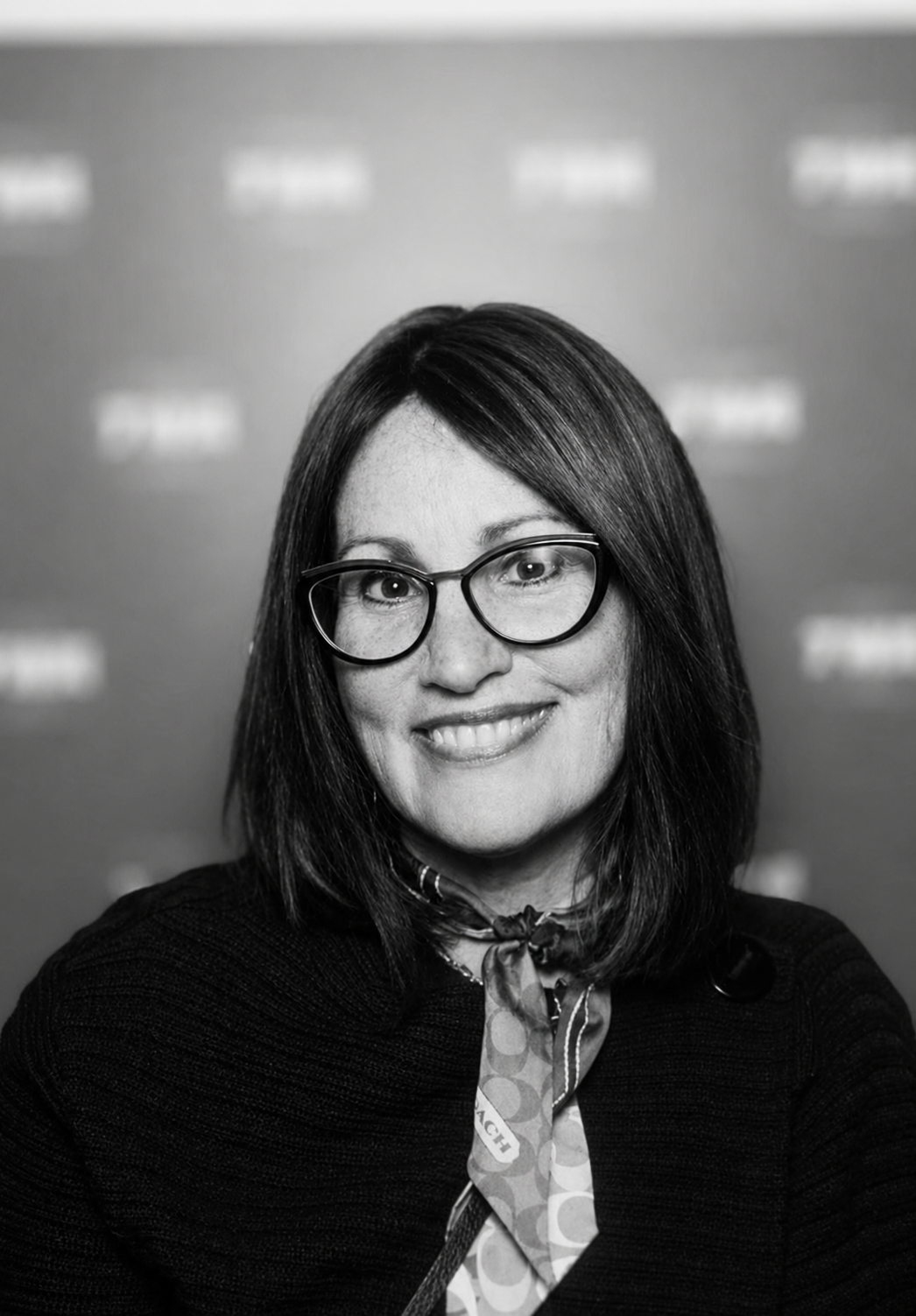
An end-of-life doula, Chanie Mandel is determined to change the way people die. Courtesy of Chanie Mandel
For Mandel, now in her sixties, this is not a job. It’s a mission. Mandel is determined to change the way people die. “Children are still being told to hide the truth from their parents and not tell them they’re dying, but that leaves so many unspoken words just hanging there, forever left unsaid,” she explains. “Most importantly, how can we honor a person’s end-of-life wishes if we don’t know what they are? One of a doula’s goals is to empower families to have conversations about these types of things.”
Mandel believes these conversations need to happen before a family is thrown into chaos by sudden illness. She also hopes that as end-of-life doulas become the norm, they will help make death and dying less taboo.
Finding Meaning in Mortality
“Why are we afraid to say the words death and dying? I think if we faced our fears and our mortality, we would actually be able to create a positive environment around death,” Mandel asserts. “It’s not as if we never refer to death; we mention it in tefillah all the time.”
She points, as an example, to the berachah of Modim in Shemoneh Esrei, which states: “We shall thank You . . . for Your miracles that are with us every day and for Your wonders and favors in every season: erev vavoker vetzaharayim.” She explains that this refers to the parts of the day, but it also refers to the stages of our lives: childhood (morning), middle age (afternoon) and old age (evening). If we’re talking about the times of the day, it makes sense that erev is mentioned first since our days start with evening. But why start with erev if we’re talking about the stages of our lives?
Modim is all about gratitude, she notes. “When do we realize how much gratitude we need to have for every moment and every day? Usually in the erev, in the evening of our lives. That’s when we face our mortality. Accepting that we are finite beings brings us to true gratitude.”
But Mandel believes that even younger people should face the fact that they are not going to be here forever. “Why don’t more of us really believe that death is a transition just like birth?”
From Birth to End of Life
Mandel trained as a birth doula nearly thirty years ago. (“Doula” is a Greek word that means “to serve.”) She augmented her training with life coaching and subsequently enjoyed a career helping countless mothers give birth at several metropolitan New York hospitals.
Unfortunately, she also experienced heartbreaking cases as a birth doula. Knafayim, an organization that provides practical and emotional support for Jewish couples experiencing perinatal and infant loss, reached out to Mandel several times to help mothers through labor and delivery, knowing their babies would be stillborn. These experiences deepened her commitment to supporting families through loss and inspired her to learn more.
While researching the topic, she came across the work of Henry Fersko-Weiss, a licensed clinical social worker who has helped many people as they journey through the dying process and cofounded the International End of Life Doula Association (INELDA). Fersko-Weiss, who is Jewish but not observant, trained Mandel as an end-of-life doula and later encouraged her to bring this work to the Orthodox Jewish community.
Assisting with a birth and assisting with a death, says Mandel, who does not charge for her doula work, have much in common. “They’re both chasadim that give us an opportunity to witness the way Hashem runs the world. ‘Hashem natan veHashem lakach. G-d gives and He takes.’”
Fersko-Weiss encouraged Mandel to write a curriculum for training end-of-life doulas that incorporated Torah hashkafah, making it appropriate for the Orthodox community. She subsequently developed her curriculum, “Soulful Passage.”
Over the past three years, Mandel has launched what she calls “a grassroots movement,” training scores of women from around the world—including social workers, rebbetzins, members of the chevra kadisha, geriatric nurses, and others from all walks of life and countries including Madrid, Brazil, England and Eretz Yisrael. She recently taught a cohort of women in the United Kingdom to become end-of-life doulas and will be teaching her first cohort of men this fall. These doulas will enter homes, hospitals and hospices offering their services, some as a chesed, others for payment, but all of them driven by a desire to give people an opportunity to die with dignity.
Still, Mandel is far from satisfied. “We need many more people doing this work. The end-of-life care needs are vast, and our community needs informed people who can help.”
Preparing for Life’s Final Chapter
Mandel’s course is centered on a three-phase model. The first phase takes place while the patient is still cognitively engaged and centers on meaning and planning. During this phase, the focus is on helping the patient express her wishes for the end of life. Would she like to die at home if possible? Who does she want to be present at the time of yetziat haneshamah? What music would she like played if she’s unresponsive and can’t choose? Who would she like to eulogize her at the funeral? Where does she want to be buried?
“This gives patients a modicum of control over something they ultimately cannot control,” says Mandel. “It is also helpful for the family that carries out their loved one’s wishes because by doing so they feel connected to the niftar even when their loved one is no longer physically present.”
Accepting that we are finite beings brings us to true gratitude.
Mandel generally encourages the writing of an ethical will, or legacy letter, a nonlegal document used to pass on personal values, life lessons, blessings, beliefs and hopes to future generations. Often shared with loved ones before death, an ethical will—known in Judaism as a tzava’ah—is found in Tanach where Yaakov Avinu blesses his sons. Writing a tzava’ah can be done at many points throughout one’s lifetime, such as upon becoming a parent, and revisited and updated as needed. It can be handwritten, typed or recorded.
“A person who took my course videoed her ninety-nine-year-old father, living in Madrid, sharing his advice on life,” Mandel says. “It was the beginning of his ethical will and will live on in their family for generations.”
The process also encourages patients to reflect on the legacy they hope to leave behind: What do I mean to people? How have I made a difference in this world? A family member might interview a parent or grandparent, asking guiding questions such as: What are two or three qualities that define you? What are two of your proudest accomplishments? The responses can become the foundation for a scrapbook, essay or other keepsake.
This is also the time to ensure that the family has a rav to consult. Most likely, she’eilot will arise, and a rav can guide the family through the finer points of Jewish law. Mandel recalls working with a family whose children were affiliated with different segments of the Orthodox world. “Because there are different ‘tracks’ within the frum world and often within one family,” Mandel explains, “it can lead to tension. Having a rav to guide the family through the finer points of end-of-life halachah diffuses the tension and leads to clarity.”
Mandel makes it very clear that her role is that of a layperson, and she does not provide halachic or medical guidance. “The job description of a doula is a layperson who will always, always defer to the rav and the medical practitioner of the patient.” She does, however, frequently consult with Rabbi Dr. Shlomo Brody, executive director of Ematai, an organization dedicated to educating Jewish families about end-of-life issues and halachah, and Rabbi Elchonon Zohn, founder and president of the National Association of Chevra Kadisha (NASCK), when personal questions arise.
She also stresses the importance of ensuring that the patient has prepared a halachic living will—a legal document that appoints a health care proxy and ensures that medical decisions are made in accordance with both civil law and halachah if a person becomes unable to communicate. Such a document can help prevent confusion or conflict among family members while ensuring that a patient’s care reflects his or her religious values.
Much of Mandel’s training focuses on active listening and communication, encouraging patients to discuss regrets and any unfinished business. Unfortunately, not every story ends happily. One patient was estranged from her son and tried to make amends by reaching out to him. Unfortunately, he was not interested and wouldn’t come to see her. But she was comforted by the knowledge that she had tried.
Mandel helped her process the rejection. “We talked about it, and she came to understand that her trying was all she could do and that had to be enough. It was sad, but we worked through it.”
Nearing the End
The second phase is the active phase of death. The doula might massage the patient while appropriate music plays in the background. The family might sing favorite tefillot or songs. Perhaps passages from sefarim might be read aloud.
“This is food for the neshamah,” says Mandel. “Music, reading—whatever helps the person along their journey nourishes the neshamah.”
Other techniques include guided imagery. “One woman, hours from yetziat haneshamah, wished to daven at the Kotel one more time,” Mandel relates. “I described in vivid detail walking through Jerusalem, through Machane Yehuda, down Yaffo Street, and through the Jewish Quarter, descending the steps to the Kotel Plaza, approaching the Kotel as the sun moved past its zenith, opening a siddur and davening Minchah. Tears were streaming down both our faces.”
Although there is no medical intervention on the doula’s part, this is the stage when the doula can teach family members the signs that death is imminent. “It’s amazing what emerges at this time,” Mandel says. “A family arrived in Israel on time to spend the last day of their mother’s life with her because a doula called them after seeing the signs of imminent death.”
When Mandel was in Israel with her very ill mother-in-law, she sensed the end was near. She reached out to family members on Thursday, so they could decide whether to travel to Israel. Everyone gathered and was present at her yetziat neshamah that Shabbat. Together, they buried her immediately after Shabbat. The entire process brought comfort to the nifteret and her family.
“My dream is for there to be enough end-of-life doulas in every frum community to cover those days before petirah because that’s when it gets really intense and when the family really needs a doula around,” she says.
Once a loved one has left this world, phase three begins, where the doula’s focus shifts to the family. How are they coping? Some people simply need someone to talk to, while others need a referral to a grief therapist.
Recently, Mandel received a call about the adult children of a dying parent. Doctors had been telling them for weeks that death was imminent, and the family was in a frenzy. “Each child was under extreme stress for a different reason,” she recalls. “There was a lot of tension and fear.”
She joined a Zoom call and spoke to each child separately, trying to help them find a way to cope. She ended the Zoom call, wondering whether she’d helped, whether they’d heard her, whether she’d accomplished anything at all. I hope Hashem gave me the right words, she thought.
By the next morning, Mandel had her answer.
A text arrived from one of the children: “Thank you. I slept for the first time in seven weeks.”
This past March, Chanie Mandel presented “Soulful Passage: An End-of-Life Doula Training and Self-Exploration Journey” at an OU SPIRIT (Stimulating Program Initiative for Retirees that Inspires Thought) program. The OU SPIRIT Initiative, geared for Jewish retirees and seniors, offers inspiring weekly online educational programming. To date, the program has reached more than 10,000 individuals in countries around the world. To learn more about SPIRIT, visit https://www.ou.org/spirit/.
Leah R. Lightman is a freelance writer living in Lawrence, New York, with her family.