
Rabbi Berel Wein, zt”l: A Talmid Remembers
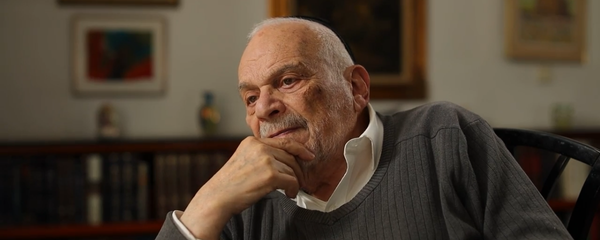
When people think of Rabbi Berel Wein, they often recall his extraordinary ability to bring Jewish history to life. He helped countless Jews feel connected to our rich and timeless heritage. In truth, who else in modern history has transmitted so much of our past to so many?
Through his tapes, lectures, books, videos and films, Rabbi Wein reached hundreds of thousands, some even say over a million. His voice carried into homes, classrooms and shuls, allowing Jews of every background to feel part of the great story of our people.
What made his work unique was not only the medium but the message. Rabbi Wein traveled across the globe, speaking to yeshivah students and federation audiences alike, bridging worlds that were often far apart. Wherever he went, he built connections, opening doors to Torah and history in a way that was approachable, authentic and inspiring.
There is another element of the bridge Rabbi Wein built that feels especially personal to me, something I may be uniquely able to share. He was, for so many, a hashkafic bridge into the world of the Lithuanian yeshivah.
Perhaps this was because he himself was part of the first generation of American-born boys who had the opportunity to absorb the personality and depth of the European yeshivah world and translate it into a language an American could understand. Many of his contemporaries let that connection slip away, but Rabbi Wein rose to the challenge. He discovered a way to bring the richness, relevance and passion of that world into his own life and avodas Hashem. This was something he absorbed deeply from his rebbeim and his family. They themselves were people who had lived within the rich spiritual life of European Jewry and then found themselves in America, struggling to connect with American youth. Not all succeeded, but Rabbi Wein was blessed with family and teachers who did find that way. He would often tell us, with such warmth, about Rabbi Yisrael Mendel Kaplan, who struck a deal with the boys: If they would teach him English through the newspaper, he would teach them Gemara. To Rabbi Wein, this was the perfect example of building bridges.
He also loved to share stories of the great gedolim who would visit Miami, and how he would help them navigate the American scene while giving them a taste of his own world, even as he absorbed theirs. These stories carried with them not just history, but a model of how to stand between two worlds and bring them closer together.
He created a place for so many who might otherwise never have found their way into the olam haTorah.
For me personally, Shaarei Torah was a place that served as a bridge. When I entered Rabbi Wein’s yeshivah in Monsey in eleventh grade, I was very far from understanding what it meant to be a ben Torah and ben yeshivah. My parents and I were able to entertain Shaarei Torah because it had very serious general studies and a diverse student body, many of whom were focused on going to college with SAT prep. In twelfth grade, I took all college credits and finished high school with a year’s worth of credit at Ramapo College of New Jersey.
It was through this opening that I met outstanding rebbeim and a beis midrash full of serious bnei Torah and masmidim. When I began Shaarei Torah, I had only a very basic understanding of the Torah world. After two years of hard work and the dedicated chinuch I received there, I graduated with the special award in limudei kodesh and went off to Eretz Yisrael to continue learning in the most serious of environments.
A sweet example of Rabbi Wein’s teaching approach took place at the end of twelfth grade. Our class graduation trip included a visit to the Kings Dominion amusement park in Virginia, followed by a drive north to Washington, DC, to see the newly opened Holocaust Museum. By that time, I felt I was too frum for an amusement park, so instead I flew down to DC with Rabbi Wein just for the museum portion. On the drive from DC back to Monsey, we stopped in Philadelphia for a baseball game. The class chipped in and bought our rosh yeshivah a Chicago Cubs cap, and there he was, sitting with us in the bleachers, in his suit and tie, surrounded by his talmidim. For me, it was a powerful lesson in how far he was willing to go to create connection. To this day, so many of my classmates feel an enduring closeness to him and to his love of Torah, no matter how diverse their hashkafos and communities have become.

Rabbi Wein in center (with Cubs cap) and the author two to the right (in Phillies cap) | Courtesy of Rabbi Yerachmiel Garfield
The main ideological relationship I developed with Rabbi Wein began a few years later, after I graduated from Shaarei Torah. I went to a very Chareidi yeshivah in Eretz Yisrael. While the Torah learning was extremely fulfilling, I could not connect to the hashkafah. I simply couldn’t find a place for myself within the Chareidi world in Eretz Yisrael, and I found the experience frustrating. I took my avodas Hashem very seriously and was learning on an intense level, but I could not embrace the outlook I encountered there.
Around that time, Rabbi Wein made aliyah. A few talmidim arranged a Friday morning Chumash shiur, and it was there that I began to reconnect with him. Through those shiurim, I saw how Rabbi Wein was able to synthesize the values of the authentic Torah world with a hashkafah I could truly connect to. Once again, he helped me build a bridge, this time between being a genuine ben Torah, steeped in Chareidi learning, and the reality of my own life and upbringing.
He never put others down in order to build Torah. Instead, he celebrated so many of our great leaders simultaneously. This gave his talmidim the opportunity to feel connected to the rich diversity of our gedolim without ever feeling distanced from the values they cherished so deeply. He made room at the table for the Ponovezher Rav, the Satmar Rebbe, Rabbi Yaakov Kamenetsky, Rabbi Avraham Yitzchak HaKohen Kook, and Rabbi Yosef Dov Soloveitchik, and so many more, to all have a place together. In doing so, he allowed his talmidim to feel that they too belonged at that table, without needing to sacrifice who they were. By emphasizing the shared core values, the chashivus of Torah, and the strength of our mesorah as the central anchors, he created an abundance of genuine opportunities for connection and growth.
Although he was never formally recognized as a leader of the broader masses of Klal Yisrael, in his quiet way he very much was. Since his petirah, countless people have come forward with stories of how he built connections for them to Torah and how his message reached them in personal, lasting ways. He created a place for so many who might otherwise never have found their way into the olam haTorah.
In more recent years, some of the talmidim were zocheh to have regular Q&A sessions with him, where he shared his thoughts on current events. There was one topic on which he became more passionate than he usually allowed himself to be: the responsibility of the yeshivah community to extend a hand to other groups of Jews and engage them fully. He reminded us of Rabbi Yisrael Salanter’s idea to establish a kollel in every Reform temple as a way to combat assimilation, and he implored us to continue reaching out and building bridges so that all Jews could find a path to connect with Torah.
For me personally, I am forever indebted to Rabbi Wein for building a wide and rich bridge that allowed me to cross into the world of Torah, ensuring that I could access the true legacy of our nation and carry it forward to the next generation with kedushah and taharah.
Rabbi Yerachmiel Garfield Ed.D. is a proud musmach of Rabbi Berel Wein, zt”l, the Head of School at Yeshiva Toras Emes in Houston, and the author of ArtScroll’s bestselling book When They Were Young (2025). He is also the host of the popular Chinuch Today and The Learning Curve podcasts.