

The entire nation of Israel and Jews around the world looked on with relief and sorrow as the body of Sergeant Major Ran Gvili was returned from Gaza in January of this year. Gvili, who was killed in battle and whose body was taken into captivity by Hamas on October 7, 2023, was returned home after 843 days in captivity. Gvili was the last of the 251 hostages to return home.
Gvili’s story highlights our sacred obligation to bury the dead with dignity and respect. While the return of Gvili’s body could not assuage the family’s grief, it gave them the blessing of closure, making it possible for them to fulfill this final act of chesed.
Yet in stark contrast, a troubling—and growing—number of American Jews are choosing cremation instead of burial, abandoning a practice that Jewish tradition has regarded for millennia as a sacred duty.
We spoke with Yael Davidowitz, outreach director for Project Last Kindness at the National Association of Chevra Kadisha (NASCK), about her work to stem the tide and to inspire all Jews of all affiliations and backgrounds to opt for Jewish burial.
Yael is a certified adult-geriatric nurse practitioner and seasoned fitness professional. A passionate Torah educator, Yael has worked with the OU Women’s Initiative, NCSY and Aish HaTorah. She lives in Cherry Hill, New Jersey, with her family.
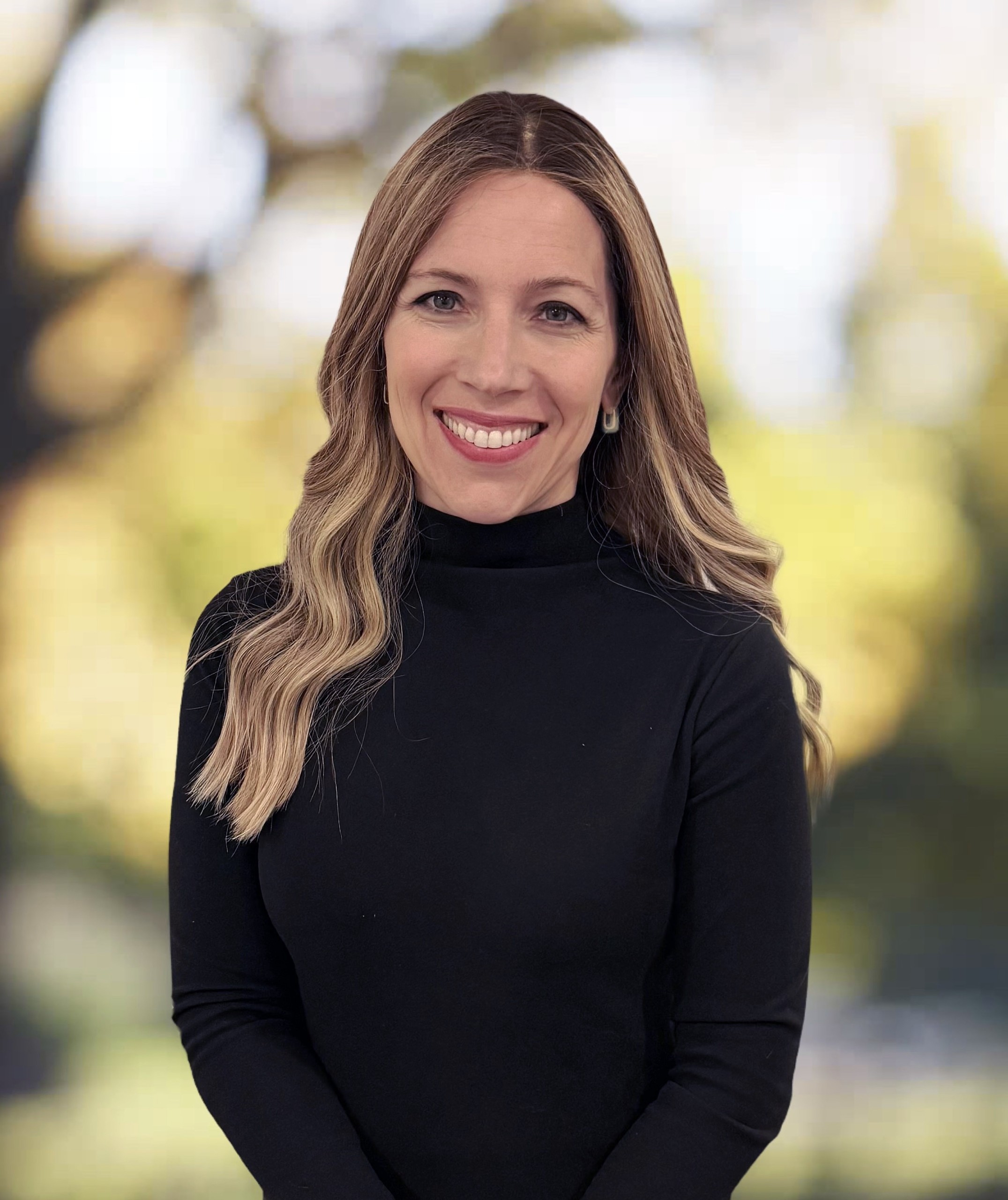
Yael Davidowitz gave up her career as a nurse practitioner to inspire Jews of all backgrounds to choose a Jewish burial. Courtesy of Yael Davidowitz
Merri Ukraincik: Has Jewish cremation reached crisis levels?
Yael Davidowitz: Yes. Cremation among Jews in the United States has reached what I would call crisis levels. This is not a fringe issue. Based on field statistics, approximately one out of every two Jews who die in the United States are cremated instead of buried.
I was recently in Florida at an event alongside a Chabad shaliach who works specifically with elderly Jews, and he told me that in his experience the rate is closer to 70 or even 80 percent in South Florida, where so many older Jews retire.
We are also seeing significant numbers of Jews choosing to cremate in parts of Europe and South America.
At its core, the issue is educational. Most American Jews have simply never been taught why Jewish burial matters.
These individuals are also not getting a taharah (sacred Jewish ritual of cleansing and purifying a deceased person’s body before burial), which is another serious concern, but the most pressing issue is that they are not being buried. What is particularly concerning is how normalized it has become. Unless a funeral home is owned by a fully Torah-observant Jew, almost every so-called “Jewish” funeral home will arrange for cremation. Some actively promote it, while others list it more quietly on their price sheets or websites, including urns with a Magen David. But in practice, most Jewish funeral homes will provide it.
Some even advertise cremation explicitly under names such as “Jewish Cremation Society.”
MU: How has cremation gone from taboo to trendy?
YD: The primary driver is cultural. Today, most Americans are cremated. As that number has steadily risen, Jewish cremation rates have followed. Most American Jews are acculturated, so when cremation becomes the societal norm, it increasingly becomes the Jewish norm as well.
According to the Cremation Association of North America (CANA) and the National Funeral Directors Association (NFDA), the national cremation rate was about 5 percent in 1972. Today it is around 60 percent, and projections suggest it could exceed 80 percent by 2045. As the broader American rate rises, Jewish rates rise alongside it.
There are additional contributing factors. Cost and convenience play a role. A direct cremation is typically less expensive than a burial and logistically simpler. Emotional considerations also factor in—concerns about distant family attending funerals, visiting graves or general discomfort with burial.
But at its core, the issue is educational. Most American Jews have simply never been taught why Jewish burial matters. If the surrounding culture embraces cremation—and even Jewish funeral homes offer it—it becomes normalized. Without direct education, the default follows the culture.
MU: What about the argument that cremation is better for the environment?
YD: The idea that cremation is more environmentally friendly is a myth. Burning anything—including human bodies—is not eco-friendly. Cremation requires fossil fuels and carries a significant carbon footprint. In 2020, the Environmental Protection Agency reported that the cremation process releases up to 30 pollutants into the air.
It is important to distinguish between traditional Jewish burial and the older American model of burial, which often involved embalming chemicals and metal caskets. Kevuras Yisrael is fundamentally different. During the taharah process, the body is returned to its most natural state. The tachrichim (shrouds) are fully biodegradable. Ideally, no casket is used, as is common in Israel. In the United States, where cemeteries typically require one, a simple pine aron (casket) with no metal components is used.
Jewish burial is, in effect, a green burial. The body returns naturally to the earth and reintegrates into the environment without industrial processing.
As for land use concerns, they are often overstated. Doron Kornbluth, in his 2012 book Cremation or Burial: A Jewish View, calculated that even if every American—not just the Jewish population—chose burial, it would take approximately 10,000 years to use 1 percent of US land mass. There is no national land shortage driving this issue. Cremation is industrial and emission-producing. Traditional Jewish burial is natural and environmentally responsible.
MU: How did you go from being a nurse practitioner and fitness instructor to a full-time advocate for Jewish burial?
YD: In 2020, Rabbi Elchonon Zohn, head of both NASCK and the Chevra Kadisha of the Vaad Harabonim of Queens and a world-renowned expert in Jewish after-life care, issued what was essentially an SOS about the growing cremation crisis to chevros kadisha around the country. Traditionally, their role is limited to taharah, but he was urging them to step into education as well.
Rabbi Chananya Kramer, the head of our chevra kadisha in Cherry Hill, New Jersey, asked me to get involved. I remember saying, “Jews cremate?” It had never been on my radar. I began looking into the issue, became increasingly moved by what I was learning, and started volunteering in outreach.
That volunteer work grew quickly. I helped build a website for our chevra kadisha, developed an educational model around the issue, and met with non-Orthodox rabbis. Over time, it became clear this was not a side project. The scope of the problem required sustained, full-time attention.
My husband and I met with Rabbi Sholom Kamenetsky for guidance. He told me to “do anything and everything possible” to address the issue. With his encouragement and my husband’s support, I stepped away from medicine and committed myself fully to this work.
Burial is, in many ways, the last physical act of kindness one can do for a loved one.
MU: Tell me about Project Last Kindness’ Mission.
YD: Its mission is simple: to help every American Jew choose kevurah, traditional Jewish burial.
Our work is grounded in a clear premise—the average American Jew who chooses cremation has never learned in any meaningful way why Jewish burial matters. We believe people want to make good choices for themselves and their loved ones. They simply need access to accurate, accessible information in order to make an informed decision. Education is therefore at the heart of what we do—through our website, workshops and direct outreach.
MU: What makes your messaging effective?
YD: Our clarity and sensitivity are what make the difference. People naturally have questions about death, but in their experience, their questions are often better than the answers they’ve been given. Judaism offers what I call “stunning clarity” about death, and that clarity provides the context to understand why burial is so important.
Our approach is not about attacking cremation—though we do debunk many of the myths surrounding it—but about demonstrating how Jewish burial aligns with values most people already hold: treating those who have died with gentleness and dignity. Burial is, in many ways, the last physical act of kindness one can do for a loved one. The fact that it is also gentle on the environment resonates with many people as well.
We work from the premise that people are thoughtful and want to make good decisions. Again and again, I see the words of Chazal come true: devarim hayotzim min halev nichnasim el halev—when ideas are shared sincerely, respectfully, and in an accessible way, they resonate.
The Holocaust, while historically relevant, no longer moves most people in this conversation, so we rarely reference it. Our approach is educational, principled and values-based.
MU: How can someone legally protect their choice of Jewish burial?
YD: We created a free, state-specific—as well as a Canadian—My Burial Wishes document that anyone can download from our website. It allows one to formally document their choice of Jewish burial and designate an agent to ensure those wishes are honored.
The document also includes options to request a taharah and decline an autopsy. Because it is separate from a last will and testament, it does not require probate. For anyone concerned that their burial wishes may not be respected by next of kin, putting those wishes in writing is essential.
MU: What’s your most impactful resource?
YD: Our Journey of the Soul workshop is definitely our most impactful resource. It’s a sixty-minute, engaging and thought-provoking learning experience that explores the Jewish understanding of the body-soul relationship, death, burial and the afterlife. That framework provides the deeper context needed to understand why burial is so important.
Contrary to the concern that learning about death is depressing, the opposite is true. Not only do participants leave committed to Jewish burial for themselves and their loved ones, but understanding death through a Jewish lens is actually energizing and life-affirming. It illuminates the preciousness of every moment and often motivates people to live with greater meaning and purpose. The feedback has been extraordinarily positive.
MU: Who’s your target audience and how do you reach them?
YD: Our initial target audience—and still our primary one—is Jews in their fities, sixties and early seventies. These are individuals who are beginning to think about retirement, downsizing, legacy and estate planning. Ideally, we want to reach people decades before the final decision becomes urgent, so they have time to learn, plan and have important conversations with family.
That said, we’ve found that the Journey of the Soul workshop resonates across the lifespan. We now present on college campuses and have even worked with high school seniors. The questions surrounding death are ultimately questions about the human experience. With older audiences, the focus is on their own decisions. With younger audiences, they often become thoughtful influencers within their families.
As for how we reach people—that remains our greatest challenge. At this point, the messaging is well-crafted and effective. Gaining the attention of the average American Jew is harder. In many ways, the further someone is from Jewish engagement, the more at risk they are of choosing cremation—and the harder they are to reach.
We run digital campaigns to meet people online, but our most effective outreach comes through partnerships—with kiruv organizations, Chabad centers, federations and other communal institutions that host workshops in person or on Zoom. We also attempt to collaborate with funeral homes, though that can be complex. Most funeral homes offer cremation, and as businesses, they are often not willing to redirect someone who is requesting it.
MU: How can we help?
YD: Almost everyone can help by identifying one person in their life who may be at risk for cremation and starting a conversation—a family member, neighbor, childhood friend or close colleague.
Helping another Jew receive kevurah is an extraordinary act of chesed and ahavas Yisrael.
Today, being “at risk” does not mean someone is disconnected or unaffiliated. Many deeply identified, proud Jews—wearing a Magen David, active in Jewish causes, even owning a grave—will be cremated if the issue is never directly addressed. Unless someone is fully Torah-observant, we can no longer assume that burial will automatically be chosen.
Having this conversation may feel awkward at first. But when it comes from a place of genuine care, it is usually well received. And timing matters. Don’t wait until someone is terminally ill or has already passed away and then approach the family—by then, it is often too late to change plans. The earlier the conversation, the better.
LastKindness.org offers many practical resources, and for the Orthodox community, we created EndCremation.org with tools and guidance for starting these conversations. We are also available for one-on-one support. If you are involved in Jewish outreach, consider bringing our turnkey Journey of the Soul workshop to your programming calendar.
Rabbi Kamenetsky has described helping a Jew at risk for cremation choose burial as a modern-day iteration of caring for a meis mitzvah. I can tell you from experience that people do not regret having these conversations. We cannot control the outcome, but we can control our effort. Helping another Jew receive kevurah is an extraordinary act of chesed and ahavas Yisrael.
Resources
Books:
• Afterlife: The Jewish View by Jonathan Morgenstern and Rabbi Sholom Kamenetsky (Mosaica Press, 2014)
• Cremation or Burial: A Jewish View by Doron Kornbluth (Mosaica Press, 2012)
Websites:
• https://www.hebrewfreeburial.org/
Merri Ukraincik has written for Tablet, the Lehrhaus, the Forward and other publications, including Jewish Action. She is the author of a book on the history of the Joint Distribution Committee.
In This Section
The Last Kindness: A Conversation with Yael Davidowitz by Merri Ukraincik
How to Speak to a Loved One About Cremation by Yael Davidowitz