
Faith on the Frontier: Orthodox Women of the Wild West

In 1895, the National Council of Jewish Women, Denver section, led a kosher picnic in Leadville, Colorado. Courtesy of Beck Archives Photograph Collection, University of Denver Libraries
“Today is Yom Kippur. We all fasted well.”
With that simple diary entry, written in 1856 in the tiny town of San Diego, California, Victoria Jacobs captured a quiet but remarkable truth: even on the farthest edge of the American frontier, Jewish women were upholding Jewish life.
At the time, San Diego’s population numbered fewer than a thousand. There were not enough Jewish men to form a minyan. Yet inside the Jacobs home, Victoria’s mother, Hannah Solomon Jacobs, ran a kosher kitchen, welcomed Shabbat by reciting the berachot over the candles, and taught her daughters Jewish traditions. The San Diego Herald noted the Jewish High Holidays that year: “The Israelites of San Diego, faithful to the religion of their forefathers, observed their New Year’s days and Day of Atonement with due solemnity. . . . We are glad to record such an act of faith under circumstances most unfavorable.”
Stories like that of the Jacobs family were far from rare. Across the vast and often harsh American West, Jewish women were steadfast guardians of faith—building homes, sustaining observance, and planting the seeds of enduring communities.
While some Jews embraced the opportunities of the frontier by assimilating and leaving Jewish practices behind, many others managed—against the odds—to transplant Judaism into these remote communities. It was Jewish women, in particular, who stood at the center of that effort.
In 1911, Clara Sky lived on a homestead in a tiny Jewish agricultural colony near Chugwater, Wyoming—home to just thirty-one Jewish families at its peak. When a late-spring snowstorm blocked matzah deliveries for Pesach, she simply baked her own.
Jewish women on farms in Republic, Washington, in the early 1900s faced grueling lives—papering their rough cabin walls with newspaper to keep out the cold and carrying water from a nearby creek for cooking. Yet Jenny Krajewski Shafran, the daughter of one of these early families, recalled: “We [still] observed all the Jewish holidays. I have never seen a more beautiful Pesach than in our little log cabin, four miles from any neighbor, right in the middle of the woods.”
In Vernal, Utah, Clare Steres’s family was the town’s only Jewish family. Her mother went to extraordinary lengths to keep a kosher home and prepare for Passover, while her father worked tirelessly to support the family.

Denver’s West Side, comprised mostly of Eastern European immigrants, soon became a traditional Jewish enclave filled with numerous small shuls as well as kosher bakeries, butcher shops and grocery stores. Seen here, Star Bakery delivery wagon with driver and horses, c. 1915. Courtesy of Beck Archives Photograph Collection, University of Denver Libraries
Following the California Gold Rush, a small number of Jewish families made their way to the Western frontier; among them was young Mary Goldsmith, later Mary Goldsmith Prag. (Like many Jewish women whose names began with an “M” sound, she adopted the common English name Mary upon arriving in America.) In 1852, at age five, she reached San Francisco from Poland, traveling by steamship via the Isthmus of Panama. Her father, Isaac Goldsmith, was a shochet. Soon after, Isaac became active in Congregation Sherith Israel, the traditional synagogue founded in 1851. Just two months after their arrival, the Goldsmiths joined other observant Jews for the High Holidays. Mary later recalled:
The first Rosh Hashanah after our arrival, Mother not being able to go, Father took my sister and me to the evening service at Sherith Israel. The men occupied the main floor, while the women were seated in the gallery. At the time, all synagogues followed a similar arrangement.
Mary’s memories show that synagogue life was central for early frontier immigrants and that many of them were observant Jews. “Away from home and friends, they clung more closely together,” she wrote, “and were more devoted to the faith of their fathers.”
She later became a respected teacher, high school vice-principal, and the first Jewish woman on the San Francisco Board of Education. In the 1920s, her daughter, Florence Prag Kahn, became the first Jewish congresswoman in the United States.
We [still] observed all the Jewish holidays. I have never seen a more beautiful Pesach than in our little log cabin, four miles from any neighbor, right in the middle of the woods.
Bavarian-born Nanette Conrad Blochman, whose Yiddish name was Yettel, stands out as another early Western woman who remained steadfast in her Jewish observance.
Born in 1830, she immigrated to America with her parents as a young woman, first settling in New York City before moving to San Francisco. In the mid-1850s, when she was in her mid-twenties, Nanette married Emanuel Blochman, a Jewish pioneer and scholar who had arrived in California from Alsace-Lorraine in 1851.
Fueled by the Gold Rush of 1849, San Francisco was a bustling metropolis in the mid-nineteenth century, home to the region’s largest Jewish population. A businesswoman running a series of millinery shops, Nanette never let her work take precedence over her religious commitments. Her eldest son, Lazar, born in 1856, recalled in his memoir:
Mother was a strict adherent to the Jewish faith and kept her [millinery] business closed every Saturday as well as [on] Jewish holidays. Her Jewish customers knew this, but she lost much of the transient trade because of the day. Despite this, [Nanette] established a reputation as a fancy milliner and had a wide scope of customers.

Bavarian-born Nanette Conrad Blochman stands out as an early Western woman who remained steadfast in Jewish observance. Courtesy of the Bancroft Library, University of California, Berkeley
Often the family’s main provider, Nanette supported Emanuel as he founded a Torah school for children in 1864 and experimented with dairy farming, winemaking and matzah baking—though none of these ventures proved profitable. Emanuel was also active in local Jewish philanthropic organizations, and the family belonged to San Francisco’s traditional Congregation Ohabai Shalom.
Nanette’s strict adherence to halachah drew notice beyond her household. In the early 1880s, a prominent Western Jewish journalist praised her as “a noble example of a pious woman who conscientiously observed the tenets of old Israel regarding the dietary laws,” adding, “Such women are certainly rare in this age and country.”
The diary of Victoria Jacobs (mentioned above), whose family arrived in San Diego in 1851 via London and Baltimore, offers an intimate glimpse into daily observance. It is filled with references to Shabbat and the holidays. In June, Victoria wrote: “It being Sabbath, me and Fanny were invited by my dear Maurice [her future husband] to dine with him and take a little walk.”
On several occasions, she recorded preparations for the “Day of Rest,” as when in late June she noted: “Busy cleaning for Sabbath.”

A founding member of the failed colony in Cotopaxi, Channah Milstein and her family, like so many other Jews at the time, moved to Denver’s West Side. Courtesy of Beck Archives Photograph Collection, University of Denver Libraries
By the last decades of the nineteenth century, Denver, Colorado, was home to a growing observant Jewish community. Many had arrived from the failed Russian agricultural colony in Cotopaxi, Colorado—a venture of sixty-three Orthodox Jews that never took root. Other frum Jews migrated west seeking economic opportunity or the healthful mountain air—Colorado had earned the reputation as the “world’s sanatorium” for tuberculosis patients by the turn of the century. Denver’s West Side, populated mostly by Eastern European immigrants, quickly became a vibrant traditional Jewish enclave filled with small shuls, kosher bakeries, butcher shops and grocery stores. In the 1880s, Miriam Kubeski, her husband Abraham, and their children emigrated from England to Central City—a silver boom mining town about thirty miles west of Denver. Born Miriam Rachofsky in Suwalk, Poland, she left her family’s farm at sixteen and married Abraham, who was studying for semichah. The couple lived in Poland with their first three children before economic hardship and pogroms drove them to Manchester, England, where Abraham worked as a Hebrew teacher and rabbi. Miriam, who gave birth to three more sons there, began her career as a midwife—often earning as much as a pound per delivery. While still in England, their eldest daughter Rachel married Isaac Shwayder, a young Torah scholar from Poland.
They were dressed in Sabbath clothes in the sitting room, both engrossed in reading from the Torah. Grandma read the Teitch Hummish, a Yiddish Bible, and Grandpa the siddur or Hebrew Bible.
News soon reached Miriam of her uncle, Alexander Rittmaster, who had found success in the rugged Colorado mountains. Her brother Abraham Rachofsky also emigrated, and soon her brother, now a prosperous dry goods merchant in Central City, sent for Miriam and her family. In 1879, Isaac went ahead, working for Abraham as a peddler. Abraham formed a minyan in a storefront and acquired a sefer Torah, while Isaac served as an unofficial rabbi for several years—though a formal shul never materialized.
Isaac was not reunited with his wife and children for two years. Family lore recounts that one Shabbat he received a rare letter from England—but he waited until after Shabbat was over to open it, honoring the sanctity of the day. When the family finally arrived in Central City, they were overjoyed to join him, though the absence of a proper Jewish community in the mining camp remained a challenge. At times, the Kubeskis became temporary vegetarians because kosher meat shipments often spoiled.
In 1888, Miriam, now Mary Kobey, settled in Denver and became a beloved midwife. Abraham helped establish Agudas Achim and earned a modest living as a rabbi and sofer. In 1901, when a Manischewitz matzah shipment failed to arrive, he and the local Jewish blacksmith built a massive oven behind the shul, overseeing matzah baking for the entire community.
Miriam’s granddaughter recalled Shabbat visits to the Kubeski home in her memoir, The Tale of a Little Trunk (1977): “They were dressed in Sabbath clothes in the sitting room, both engrossed in reading from the Torah. Grandma read the Teitch Hummish, a Yiddish Bible, and Grandpa the siddur or Hebrew Bible.”
The yamim tovim were celebrated with enthusiasm. Miriam served family favorites like kishka and tzimmes, and the sukkah was decorated with colorful, ripe fruits and vegetables.
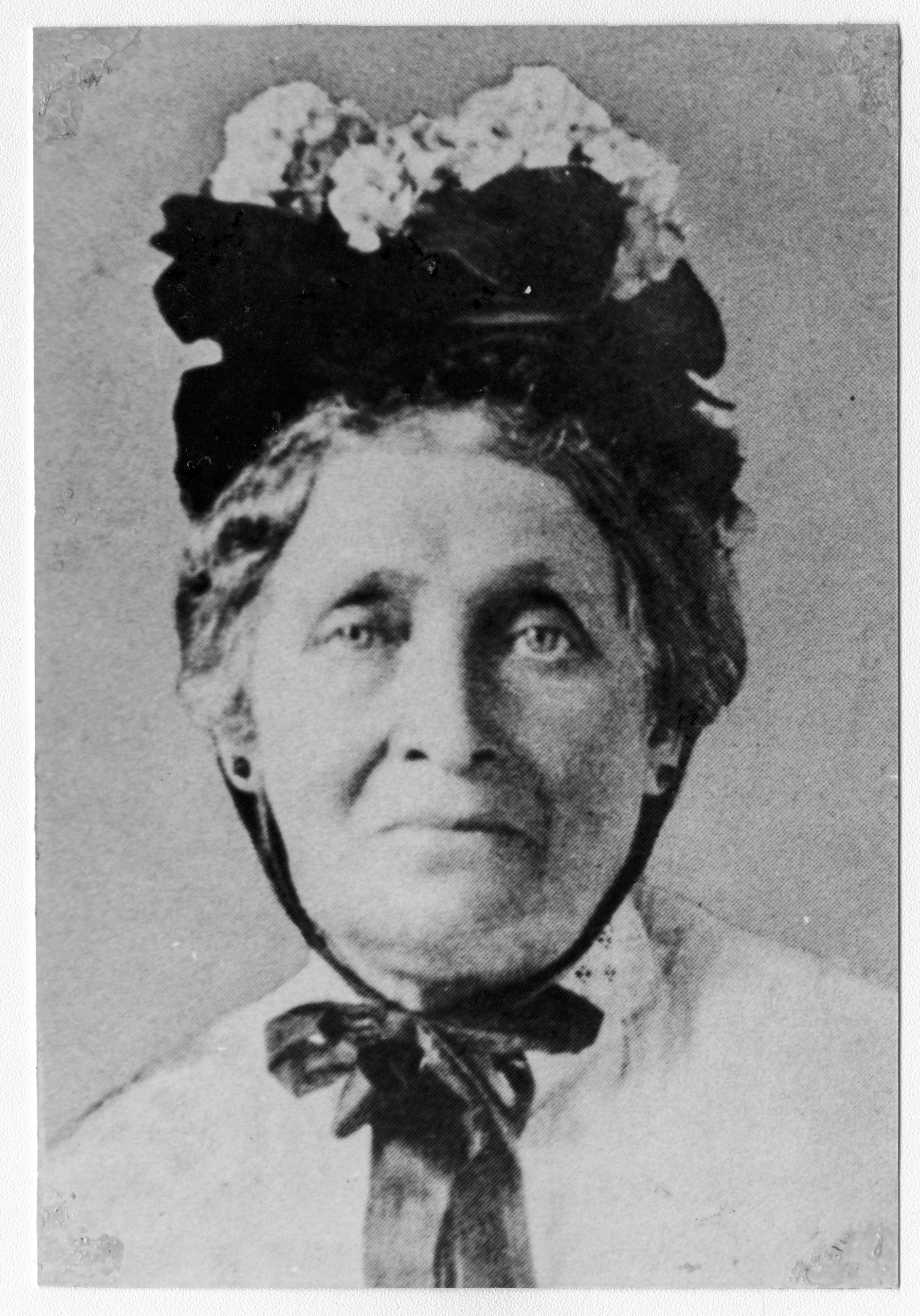
Miriam Kubeski and her family become temporary vegetarians because the kosher meat shipments to Central City, Colorado, often spoiled. Courtesy of the Ira M. and Peryle Hayutin Beck Memorial Archives of Rocky Mountain Jewish History
As a midwife, Miriam earned the nickname “Denver’s Angel of Mercy” for her selfless care of poor immigrant mothers. Gemilut chesed guided her every action. She volunteered her services free of charge, collected money and clothing for baby layettes, and brought homemade chicken soup to new mothers. Her granddaughter called her “the Pied Piper of West Colfax”—referring to the main street through Denver’s Eastern European enclave. Children she had delivered often trailed her wherever she went, seeing her as a surrogate grandmother.
Miriam’s reputation extended beyond the Jewish community. On one occasion, Dr. Henry Buchtel, a leading Denver obstetrician, introduced her at a medical convention as “the most famous midwife in Denver.” She passed away in 1921, leaving descendants who would shape the city. Miriam and Abraham helped found Denver’s Jewish Free Loan Society, and the Shwayder family remained prominent in Denver’s Jewish and civic philanthropy for nearly a century.
Miriam’s daughter, Rachel Shwayder, emerged as the real “boss” of the family—a strong-minded matriarch who guided the household. Isaac opened a grocery store in Denver, and Rachel, like so many immigrant women, supplemented the family’s modest income by taking in boarders. In 1910, the couple’s sons founded the Shwayder Trunk Factory, which would eventually grow into the world-famous Samsonite Luggage Corporation.
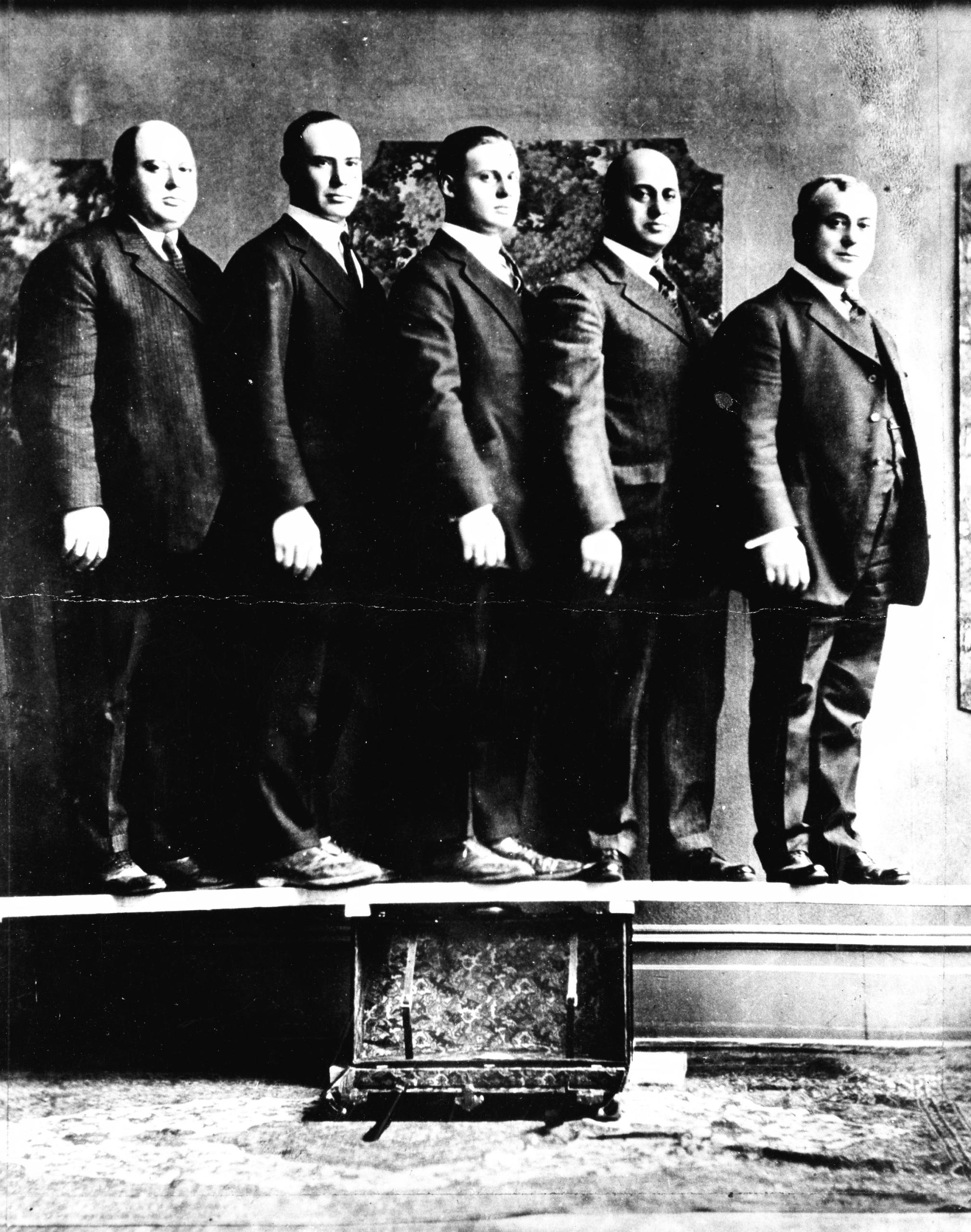
In 1910, Isacc and Rachel Shwayder’s sons founded the Denver Shwayder Trunk Factory, which evolved into the world-famous Samsonite Luggage Corporation. Seen here, the Shwayder brothers demonstrate the strength of a Samsonite suitcase. Courtesy of Beck Archives Photograph Collection, University of Denver Libraries
The Shwayders kept Judaism at the center of family life. Their daughter, Hannah Shwayder Berry, recalled Passover at her parents’ table with all ten Shwayder children gathered around: “Mama, her face flushed from the heat of the kitchen, lighted [sic] the candles, covered her eyes with her hands, and chanted the ancient blessing.”
In preparation for the Seder, Rachel spent days at her blue enamel stove, bringing out the family’s Passover dishes and preparing traditional foods: gefilte fish (hand-ground from a feisty carp that had swum in a backyard tub for several days), kneidlach, borscht, and hand-grated horseradish.
Ida Cook was a contemporary of Miriam Kubeski in Denver’s West Side Eastern European community. She arrived at Ellis Island from Russia in 1892 with four children to join her husband, Harry, and the family soon moved west to Denver to be near others from their hometowns. Ida became the mikveh attendant at a local shul, and before the turn of the century, the couple opened Cook’s Russian Baths, which included a mikveh for Jewish women. For years, Ida faithfully served the community. Although mikveh observance often fell by the wayside in America, it is noteworthy that as early as 1857, the small Orthodox congregation Hebrah Shimra Shabboth in North Beach, California, maintained its own mikveh.
In 1910, around the same time that Ida presided over the local mikveh, Russian-born Devera Ginsberg moved with her husband and daughter from New York City to Colorado. She began creating handmade sheitels for women in Denver who covered their hair according to Jewish tradition. While many Eastern European Jewish women in America had abandoned the traditional sheitel in the name of modernity, enough Denver women retained the custom to sustain a thriving business for Devera and her sister Molly.
From Victoria Jacobs’ diary in San Diego to the bustling Jewish neighborhoods of Denver, these accounts reveal a continuous thread: Jewish women, whether on isolated homesteads or in growing urban communities, played a pivotal role in sustaining Jewish life in Western towns and cities in the late nineteenth and early twentieth centuries. Through their efforts, the seeds of Jewish tradition they planted—and nurtured—have grown deep roots in Jewish communities across the American West.
Dr. Jeanne Abrams is professor emerita at the University of Denver. She served for many years as director of the University of Denver’s Rocky Mountain Jewish Historical Society and as curator of the Beck Archives of Rocky Mountain Jewish History. She is the author of six books and numerous articles in scholarly journals and popular magazines, and in 2023, she was inducted into the Colorado Authors’ Hall of Fame.
This article is an expanded version of an article titled “Orthodox Women in the Wild West” that was published in Jewish Action in 2008.
In This Section
Celebrating 250 Years of America: The Orthodox Jewish Experience
Reflections on Orthodox Jewish Life in America by Rabbi Dr. Jacob J. Schacter
Why American Jewish History Matters: The Orthodox Experience by Rabbi Dr. Zev Eleff
America and the Problem of Opportunity, a conversation with Rabbi Yaakov Glasser
The Early Years of American Orthodox Judaism: A Historical Timeline
1830s–1860s: Pre–Civil War/Early Nineteenth Century
Moses Seixas (1744–1809)—The Promise of Liberty by Dr. Jeanne Abrams
Aaron Lopez (1731–1782)—Faith Before Fortune: Jewish Life in Colonial America by Saul Jay Singer
1830s–1860s: Pre–Civil War/Early Nineteenth Century
Isaac Leeser (1806–1868)—Champion of Orthodoxy by Rabbi Dr. Zev Eleff
Rebecca Gratz (1781–1869)—A Life of Giving by Dr. Melissa R. Klapper
1870s–1930s: Post–Civil War through Early Twentieth Century
Rabbi Jacob Joseph (1840–1902)—The Tragic Tale of New York’s Only Chief Rabbi by Rabbi Dr. Zev Eleff
Rabbi Herbert S. Goldstein (1890–1970)—The Maverick Rabbi by Rabbi Aaron I. Reichel
Faith on the Frontier: Orthodox Women of the Wild West by Dr. Jeanne Abrams
The American Story in the Responsa: She’eilos from the New World by Rabbi Moshe Taub