

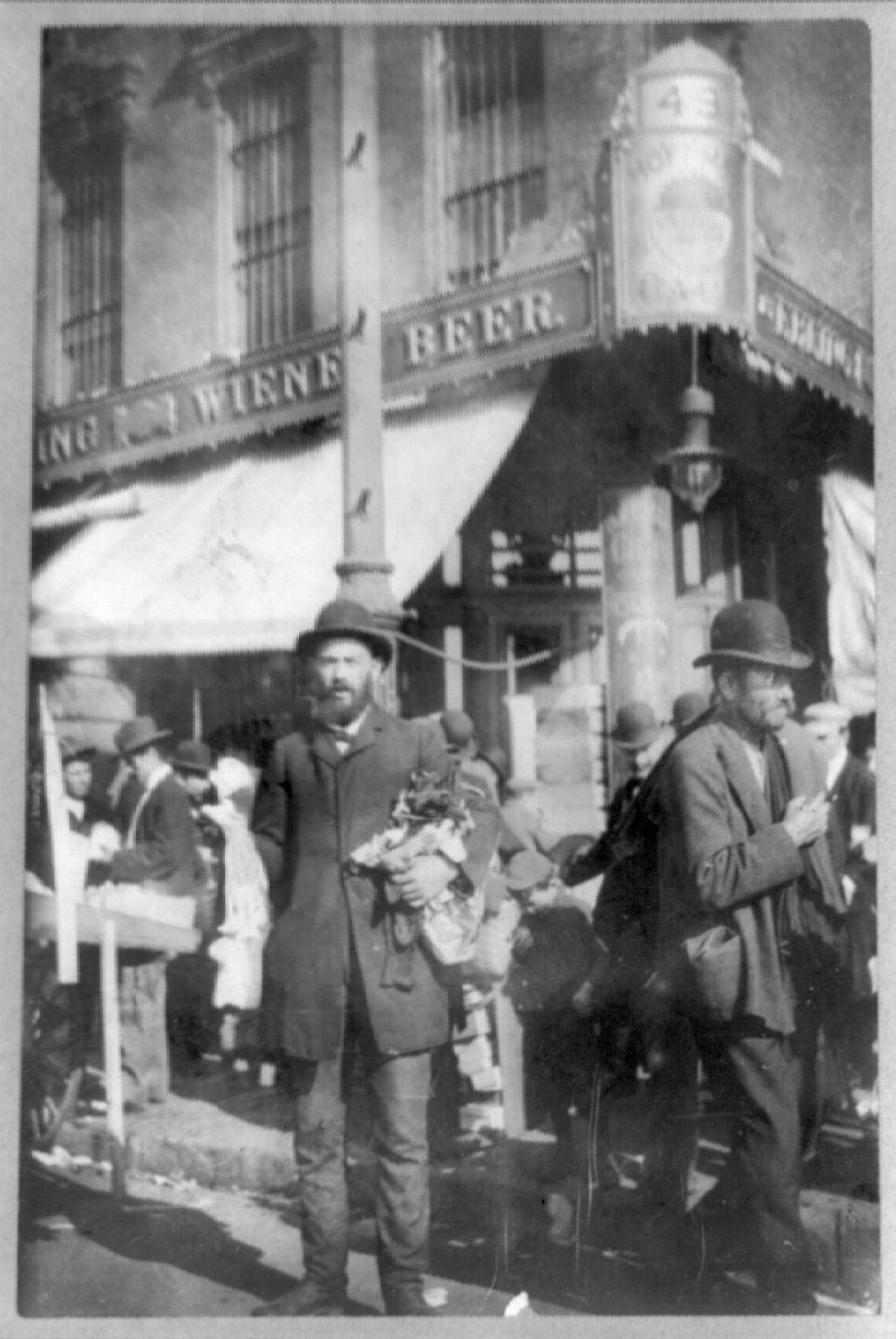
Jewish market on the Lower East Side, New York, in 1890; Photos courtesy of the Library of Congress, Prints & Photographs Division
Jewish Action Editor-in-Chief Nechama Carmel spoke with Rabbi Yaakov Glasser, the OU’s managing director of Community Engagement, about American individualism, rising antisemitism and the hidden cost of freedom.
Nechama Carmel: Rabbi Moshe Feinstein famously described America as a “malchut shel chesed” (a benevolent government). How do you understand the American Jewish experience in that light?
Rabbi Yaakov Glasser: Jews were, by and large, welcomed into this country. As a rav in Russia who was forced to flee, Rav Moshe understood firsthand what it meant to live in an oppressed state, where the Jewish people were subject to the whims of local crime and antisemitism. More distressingly, not only did the government not protect its Jews, it often instigated antisemitism.
The American Jewish experience is so very different, historically speaking. At its core, America is a malchut shel chesed. Even with the troubling rise in antisemitism that we are now witnessing, and even with some voices in government that are deeply concerning, we do not go to sleep at night worrying that law enforcement agencies will knock on our doors and take our families away, to be put on trains or executed in a nearby forest.
Our experience in the United States of America, as opposed to many other experiences throughout Jewish history (certainly much of Ashkenazic history), has largely been one not of survival, but of opportunity. The Jewish people in this country are likely more financially successful than at any point in our history. And this is due, in no small part, to the freedoms and opportunities we have been granted here.
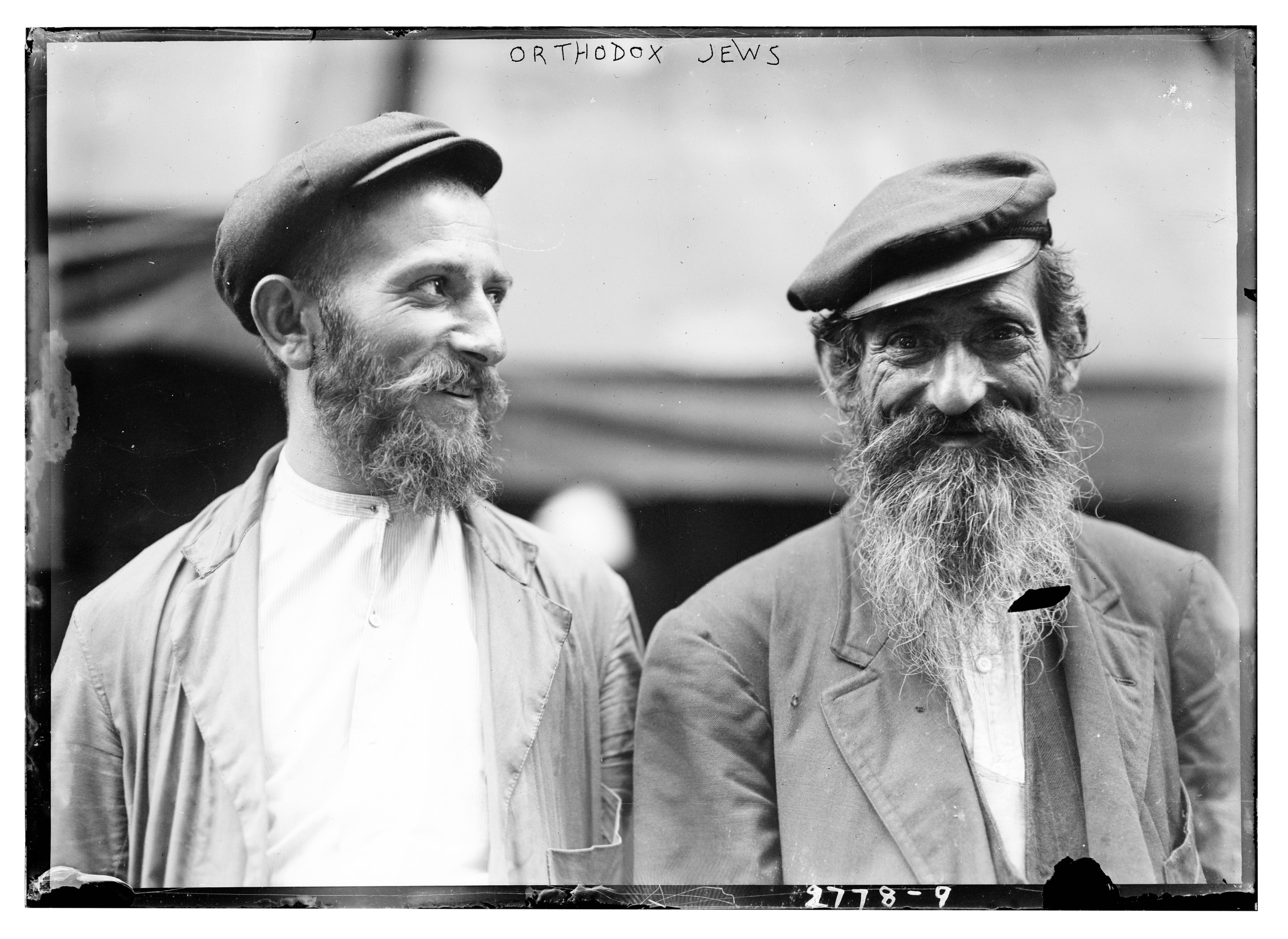
Orthodox Jews in 1910
NC: Would you say it’s important to feel hakarat hatov to America?
Rabbi Glasser: Very important. We are now multiple generations into a sense of entitlement and, to some extent, complacency about this gift. It’s not just about saying thank you. Who are you thanking? You’re talking about an abstract entity. What hakarat hatov means, literally, is a recognition of the good—not merely an expression of gratitude. It begins with appreciating what we have and looking around at our society—the proliferation of Jewish institutions, yeshivot, shuls, and communities—and recognizing that much of this exists because of the broader reality in which we live.
It’s very easy in our community to create a bifurcation between religious and secular. The country is placed in the secular box, while we see ourselves in the religious box. We dip into the secular box when we need something practical for our community, but we don’t hold the things in that box to be of sacred importance.
Part of what we need to do is cultivate a deeper appreciation for that broader reality and what it affords us, and to carry ourselves as responsible, engaged citizens of the United States. I would say hakarat hatov expresses itself in several ways.
The first is by respecting America’s laws and institutions—not trying to work around them, but recognizing why they exist and valuing the process of law itself.
The second is by engaging in the American reality: voting, participating in civic life, being engaged in the political process and public affairs, and caring about all its citizens—not only the Jewish community.
Finally, hakarat hatov requires historical awareness—zechor yemot olam—to recognize and appreciate what we have in contrast to what came before, and to understand the magnitude of the gift we have been given.
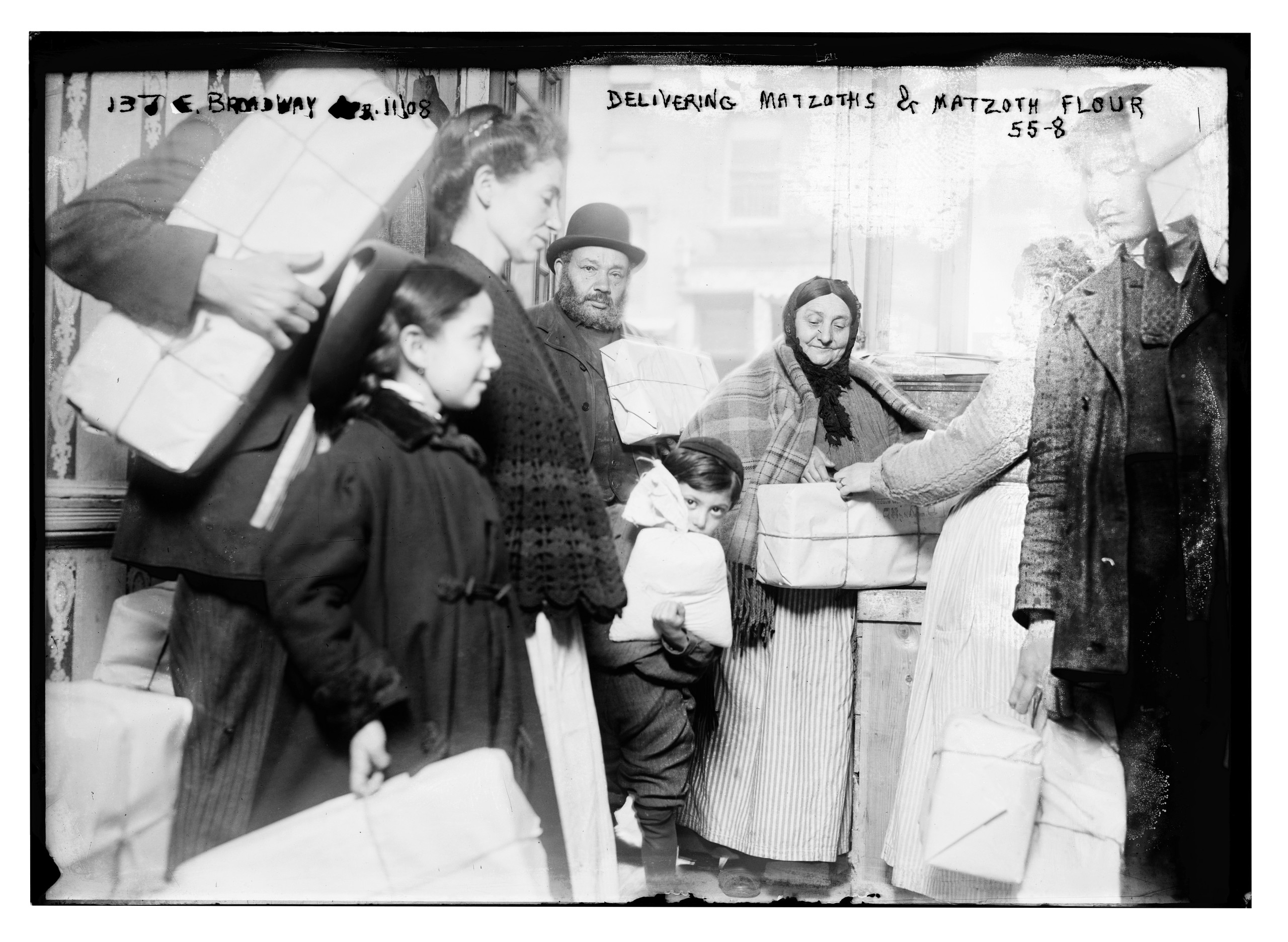
Delivering matzot and matzah flour
NC: Since Jews first started settling in this country, what would you say have been the challenges that American life presented to Jews in particular? Specifically, what have been the challenges of opportunity?
Rabbi Glasser: The challenges of opportunity are essentially the challenges of choice. American culture is so open, so deeply rooted in autonomy and independence. It provides people with almost unlimited opportunity for self-actualization. These are challenges, which, of course, are also blessings. The opportunities available to us in this country—for education, careers, and so much more—are extraordinary in the context of Jewish history.
And yet, there were eras in American Jewish history where the choices and the challenges were different. American Jews had to contend with a level of intolerance toward religious observance. Many of us had grandparents or great-grandparents who worked six days and then had a choice to make: keep Shabbat or lose their job. In those years, there was also very limited Jewish education, so the ability to perpetuate not only Jewish observance but even Jewish identity to the next generation was an existential challenge. It wasn’t a physically existential challenge, but it was equally existential in a spiritual sense: How are we going to pass this along to the next generation?
In 1964, Look magazine ran a famous cover story titled “The Vanishing American Jew,” which predicted the demise of observant Judaism because there didn’t seem to be a mechanism to pass it on. We famously say that the Orthodox Jewish community is stronger than ever in the United States and the only thing that vanished was Look magazine.

Jews praying on Rosh Hashanah in New York City in 1907
NC: You’ve spent so much of your life in kiruv and community building. Tell me about assimilation in American Jewish life. What happened to the majority of American Jews, and how did it happen?
Rabbi Glasser: In the early years there was no institutional infrastructure in this country. Communities were essentially organic, and the success of perpetuating Jewish identity to the next generation was entirely in the hands of the individuals who were striving to do so. There was no legislation protecting religious rights such as Shabbat observance, and access to kosher food was limited.
There was also significant poverty, and immigrants had to navigate the demands of a new reality, a new culture and a new language. The dissonance between generations within these frameworks was considerable, and support structures existed only where communities had already formed.
Whatever sense of commitment, loyalty and initiative people brought with them became the only tools they had to advance their families. The experience was extremely challenging. While many were able to absorb Jewish culture in a basic way, they often could not internalize the fundamentals of Jewish identity as a set of core values—values significant enough that one would be willing to make sacrifices or accept inconvenience to uphold them.
Not surprisingly, many were lost to assimilation. Some had the courage and the strength to persevere and bring forward a set of standards and commitments anyway, but others didn’t.

A Judaica shop on Broome Street, New York, in 1942
NC: How do you view our role, as educated Jews, toward so many of our brothers and sisters who are, in many cases, lost through no fault of their own? What is our responsibility toward them?
Rabbi Glasser: Assimilation today is much more complicated than it was when I began my kiruv career because we are now several generations removed even from simply being exposed to authentic religious life.
When I first started, we were doing kiruv with Conservative and Reform Jews who, for the most part, had exposure to parents or grandparents—or at least great-grandparents—who had some level of Jewish tradition. You could build on that and help that spark come alive. Today, you’re dealing with Jews who are so far removed that you are essentially starting from scratch. It’s a much greater challenge.
I am biased because I spent much of my career in kiruv. But a lot of this is, in some sense, our fault.
One of the casualties of our success—of becoming so strong—is that we have the benefit of being able to be more insular and self-focused. Look, for example, at the New Jersey community where I live. We don’t have a single Conservative or Reform shul in the entire community. Some people view that as a victory. But there is another way to view it: as a catastrophe. Because what it means is that a lot of Jews have assimilated and are no longer part of the community. And it also means that wherever these clusters of non-religious Jews exist, they are not in accessible spaces where they can connect with frum Jews and potentially be influenced. So we didn’t win—we lost. If you feel a sense of achrayut for every Jew, you understand that we lost.
Hope engenders achrayut—a sense of responsibility that compels action. Looking at assimilation or antisemitism and concluding that the situation is hopeless is an attitude that leads to paralysis.
NC: Is fighting assimilation American Jewry’s biggest challenge at this time? Is rising antisemitism?
Rabbi Glasser: That’s a hard question because for different parts of the community, at different moments, and for different people, the challenges are different.
There is no question that Klal Yisrael is losing people to intermarriage. And that is a crisis. And yet, declaring assimilation as the central crisis of American Jewry can be somewhat unhelpful because it’s not a crisis that most people feel they can meaningfully address.
At the same time, we have to remember that we move history. We do it all the time. Every single chag shares a similar theme: We celebrate a moment of apparent hopelessness, where the combination of siyata d’Shmaya and the resolve of the Jewish people gives rise to a miracle.
Look at the story of Purim. That was also a moment of profound danger. If this interview were taking place with Mordechai and Esther in ancient Persia, you would be asking them the same question: What are we going to do about rising antisemitism? It was no less hopeless in the time of the Chanukah story, as well as during galut Mitzrayim.
Rabbi Jonathan Sacks, zt”l, has a powerful quote: “Optimism and hope are not the same. Optimism is the belief that the world is changing for the better; hope is the belief that, together, we can make the world better.” Optimism is a more passive attitude that things will improve. When you’re hopeful, you put in the work to make it better.
Hope engenders achrayut—a sense of responsibility that compels action. Looking at assimilation or antisemitism and concluding that the situation is hopeless is an attitude that leads to paralysis. It’s also an attitude that stems from a lack of faith layered into one’s historical consciousness. On the other hand, we could take the attitude that these are formidable challenges. We have no idea how we’re going to solve them perfectly, but we know that little by little, if we put ourselves into the fight against assimilation and religious apathy, there’s a Ribbono Shel Olam behind us who will enable us to succeed and to prevail. And I believe that. We can’t be hopeless, and we won’t be hopeless.

Sunday morning crowds fill the market at Orchard and Rivington on the Lower East Side.
NC: Antisemitism today seems different, and is even evident among political figures.
Rabbi Glasser: We’ve always had antisemites. What’s very concerning about what’s happening now is not just the antisemites and the antisemitism, but the tolerance—and, in some cases, the embrace—of antisemitism as an acceptable option within society by a large segment of the culture and the country. Thirty years ago, you could walk down the street and someone might call you a Jew, or something like that. But did it feel normalized? If it happened on a subway today, people would just stand around and say, “Yeah, look what they’re doing in Israel . . . look what they’re doing to the Palestinians.”
The normalization of antisemitism is very, very troubling. And things like the election of public figures who are themselves antisemitic are a manifestation of that.
Ten years ago, if you went to a shul in America, you didn’t see too many security guards—maybe in the very large shuls, and maybe on Shabbat morning. Now, just about every shul and every school has an armed guard.
Nevertheless, when shul is over, people walk home on the streets, they congregate in the parks, and they carry themselves with a sense of overall security. On some level they feel insecure, and on some level they still feel, “This is the United States of America—I can walk home.”
Many Torah commentators wrote explicitly that the Ribbono Shel Olam brings antisemitism into the world to strengthen Jewish identity. Because when we are threatened, we tend to hunker down in who we are, in our identity. But strengthening our identity only in times of threat is not the healthiest way to go about it.
Irrespective of all this, our job is to do as much as we can to make sure we are as safe as possible.
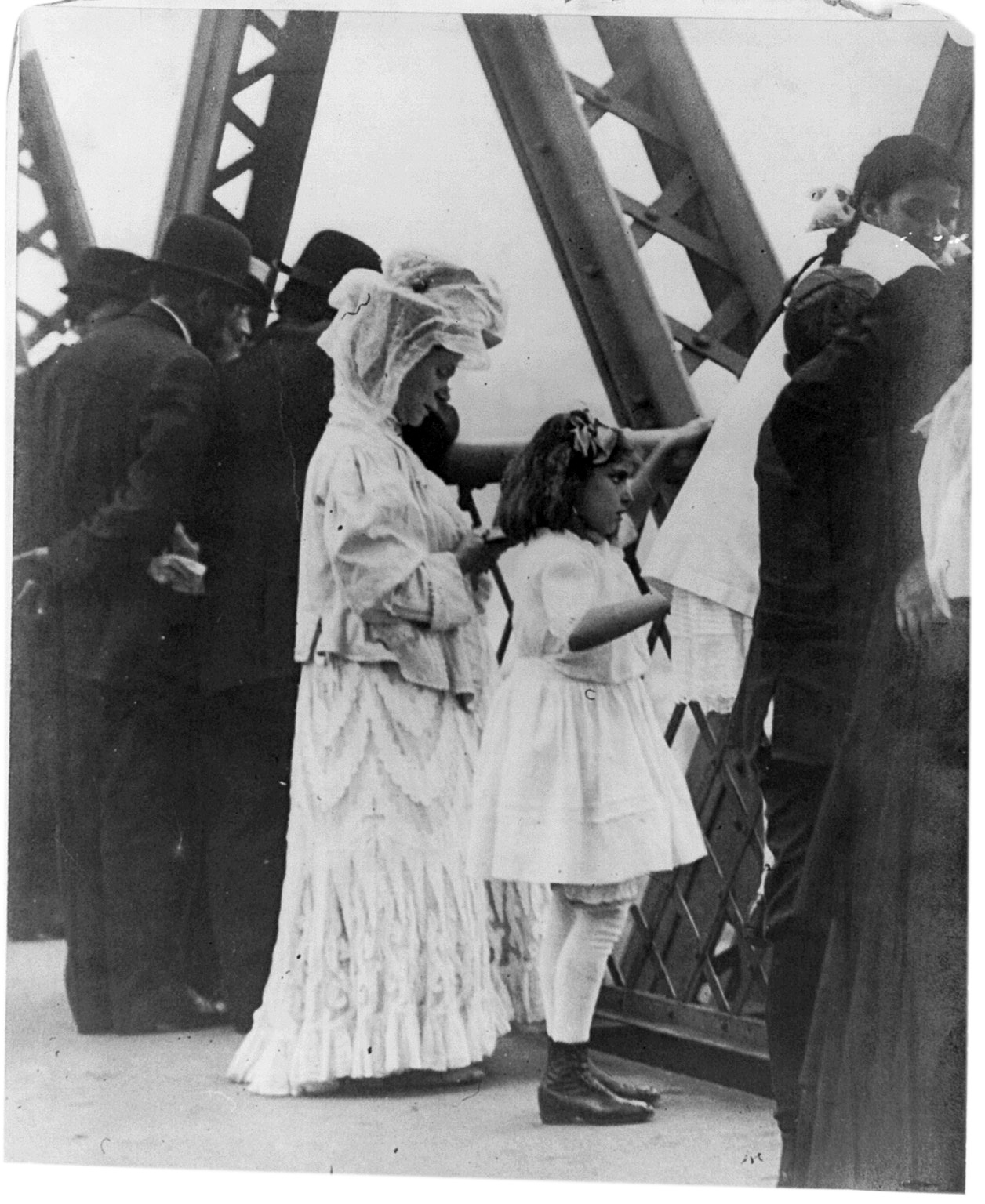
Tashlich on the Brooklyn Bridge in 1909
NC: We talked earlier about America being a country that has a certain set of values—for example, autonomy and individualism. I’m wondering if individualism is a positive factor in our society and in our mindset.
Rabbi Glasser: Individualism in its extreme form is very challenging for what we’re trying to accomplish, because it suggests that a person can center their whole world around what is best for them. And that’s not what we believe. We believe in a life where we are accountable to others. We believe in authority. We believe in being deferential to a Higher Purpose. We believe in conforming to a certain set of expectations, many of which we understand frame our life with a great deal of meaning and purpose, and some of which we do not understand but simply accept as part of our loyalty to the Ribbono Shel Olam. So we have to carve out a very large space for a deference to authority that runs counter to the extreme manifestation of individualism.
But America did not always represent such an extreme manifestation of individualism. There was a time when individualism meant that people had the freedom to pursue their sense of happiness, but there was a recognition that in broader society there were limits. As individualism has increasingly come to occupy the core of Western culture, which is now almost entirely built on “I want” and “what’s best for me”—a dynamic that is further amplified by social media—it has become more challenging.
To say that we reject individualism completely is a mistake. We believe in individuality. No two people share the same mission in life. Every person was created for a unique purpose that cannot be replicated by someone else. We are all a composite of our background, our strengths and weaknesses, our circumstances and our place in history, and we each have something unique to contribute—our own shelichut.
We do not believe in the extremes of collectivism, where everyone is a cog in a wheel. At the same time, we do not believe in the extremes of individualism. As Rabbi Joseph Ber Soloveitchik discusses, we believe in a dialectic, where the individual is developed by virtue of being part of a larger collective, and the collective is composed of the unique contributions of all its individuals. So for us, it’s more nuanced.
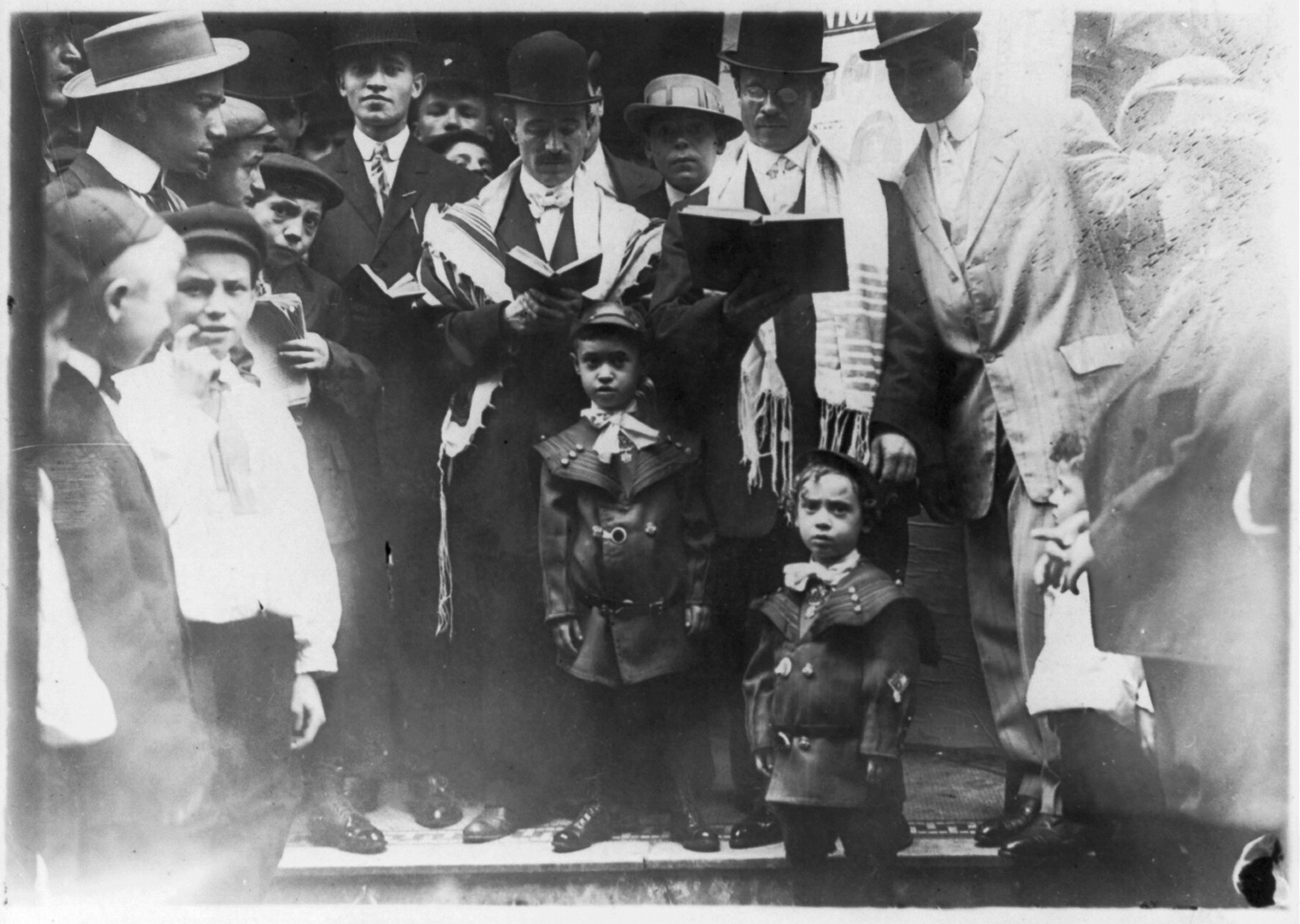
Jews praying on Rosh Hashanah in early 1900s
NC: Do you see individualism negatively impacting the younger generation?
Rabbi Glasser: Extreme individualism is not a uniquely American issue; it’s a Western cultural issue.
In fact, society itself is beginning to recognize the challenges posed by extreme individualism. This is evident when you read discussions about the younger generation and their expectations in the workplace. And yet, while we may be at a point where we have a generation that is characterized as highly individualized, entitled and materialistic—young people who want to do whatever they want—at the end of the day, when something matters to them, they will sacrifice that individualism for something they see as greater than themselves. When the war in Israel broke out, there were hundreds of millennials and Gen Zers who were, on the surface, so focused on themselves yet ready to give life and limb to fight for their land and their people.
This speaks to the fact that, when it really matters, our youth show up. Even though they have grown up in this culture of individualism, a piece of them remains anchored to who we are and what we stand for.
NC: What is the spiritual cost of the freedom and openness that have made America such a blessing for Jews?
Rabbi Glasser: If you have a society that is open and tolerant—not exclusively built on Torah values, but on more universal values—then, by definition, that society will allow in a certain degree of permissiveness. There is an aspect of secular culture that we hold to be not only wrong, but also corrosive, toxic and highly inappropriate for what we are trying to achieve, and we try to protect ourselves from it.
At the same time, the very ability to do that is itself part of the malchut shel chesed.
We do not want a society in which the United States government decides what is appropriate and what is not, because that determination will not always align with our values—as it hasn’t in many other periods of Jewish history.
A Jewish peddler selling socks
NC: Before we wrap up our conversation about American Jewry, we should at least mention the fact that many American Orthodox rabbis—certainly in the Modern Orthodox community—and many young people are making aliyah. What impact does that have on American Orthodoxy, and what does that say about us?
Rabbi Glasser: When Rav Moshe made the statement that “we live in a malchut shel chesed,” he was speaking about a United States of America at a time when the alternative was a still-developing State of Israel. In those days, it required great mesirut nefesh to live there, materially speaking. Nowadays, Israel has far more to offer materially; living there does, however, require mesirut nefesh, though in a different form: the wars, the sirens, the constant realities of life in Eretz Yisrael.
But the question we all need to ask ourselves is this: What are we still doing here? Why are we not living in Eretz Hakodesh? To be sure, it is a complex conversation, and people’s responses can be broadly divided into three categories.
There are those who believe we have no right to remain here in the US now that we have a thriving State of Israel. On the other extreme, there are those who feel moving to Israel is a nice idea, but not for them; they are content to settle there when Mashiach comes. For now, this is where they are, this is their home, this is their community.
And then there is a middle category: people who are here but struggle with being here. They are held here by various factors—parents, education, communal ties, parnassah or other considerations—but there remains a part of them that aspires to live in Eretz Yisrael.
That is not a small segment of the community—in fact, it is growing. You see it in people purchasing property in Israel even when they are not moving, and you see it in the increased frequency of travel there. The pull of Israel and the push of antisemitism are, together, reshaping our relationship to this medinah shel chesed.
When Rav Moshe arrived on these shores, this was the haven. It is no longer the only haven.
That does not diminish our hakarat hatov to the United States. But it does raise a question we must all reflect on: What is the future of the American Jewish community?
In This Section
Celebrating 250 Years of America: The Orthodox Jewish Experience
Reflections on Orthodox Jewish Life in America by Rabbi Dr. Jacob J. Schacter
Why American Jewish History Matters: The Orthodox Experience by Rabbi Dr. Zev Eleff
America and the Problem of Opportunity, a conversation with Rabbi Yaakov Glasser
The Early Years of American Orthodox Judaism: A Historical Timeline
1830s–1860s: Pre–Civil War/Early Nineteenth Century
Moses Seixas (1744–1809)—The Promise of Liberty by Dr. Jeanne Abrams
Aaron Lopez (1731–1782)—Faith Before Fortune: Jewish Life in Colonial America by Saul Jay Singer
1830s–1860s: Pre–Civil War/Early Nineteenth Century
Isaac Leeser (1806–1868)—Champion of Orthodoxy by Rabbi Dr. Zev Eleff
Rebecca Gratz (1781–1869)—A Life of Giving by Dr. Melissa R. Klapper
1870s–1930s: Post–Civil War through Early Twentieth Century
Rabbi Jacob Joseph (1840–1902)—The Tragic Tale of New York’s Only Chief Rabbi by Rabbi Dr. Zev Eleff
Rabbi Herbert S. Goldstein (1890–1970)—The Maverick Rabbi by Rabbi Aaron I. Reichel
Faith on the Frontier: Orthodox Women of the Wild West by Dr. Jeanne Abrams
The American Story in the Responsa: She’eilos from the New World by Rabbi Moshe Taub